 Handpack
Industrial Dynamics of Poly Strapping Heat Sealers: A Structural Shift
The modern logistics and packaging sector is undergoing a profound paradigm shift. The historical reliance on traditional metal seals is rapidly diminishing, paving the way for advanced polymer-based strapping solutions. Polypropylene (PP) and Polyester (PET) are now the structural backbones of secure cargo transport worldwide. Driving this evolution is the industrial poly strapping heat sealer—a critical mechanism engineered to join plastic strap ends using thermo-fusion. This process eliminates the ongoing overhead and joint weakness associated with metal buckles.
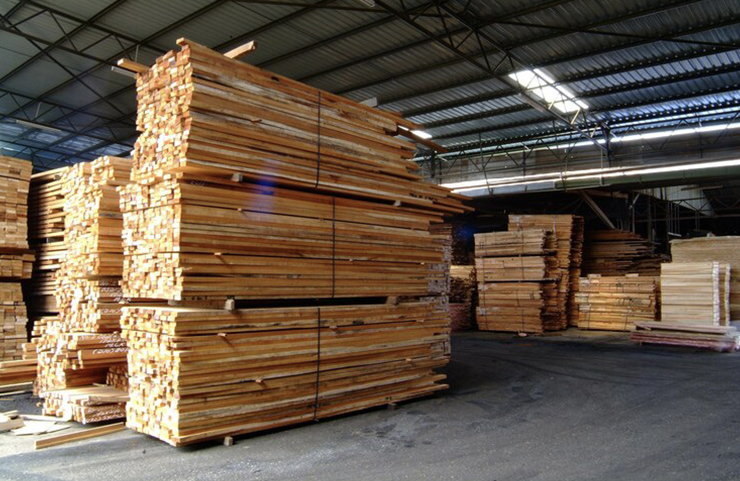
From a metallurgical perspective, mechanical seal joints achieve only a fraction of the strapping band's actual tensile limit. Conversely, a calibrated friction-weld or thermal heat seal can secure up to 85% of the raw material’s ultimate tensile strength. This structural integrity guarantees that heavy-duty shipments, such as timber loads, metal profiles, and heavy industrial machinery, remain intact throughout rough maritime transit or multi-modal handling. As a leading poly strapping heat sealer factory, our engineering goals target three main performance vectors: tension retention, energy transfer efficiency, and tool life.
Mechanical Friction Welding vs. Thermal Element Sealers
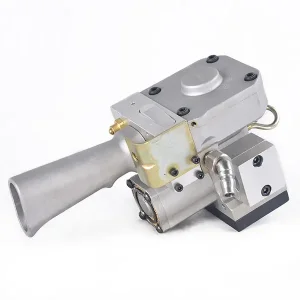
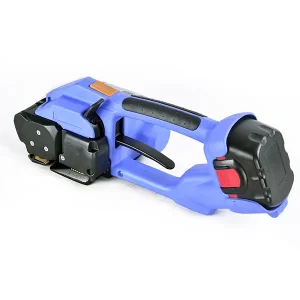
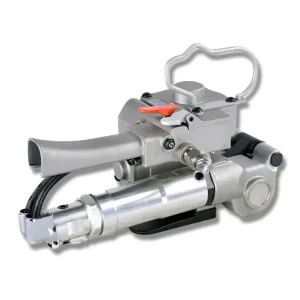
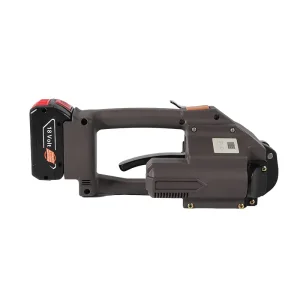
When sourcing from a wholesale strapping factory, procurement officers face a vital choice between friction-weld technology and electrical thermal elements. Friction welding is the cornerstone of pneumatic and battery-powered tools (such as the DD160 Battery Strapping Machine). This technique rotates a textured weld foot under high frequency against the strap surface. The resulting friction melts the plastic layers instantly, and they fuse under pressure to form a solid molecular bond.
On the other hand, thermal element heat sealers rely on direct contact with a resistance-heated plate. This method is predominantly used in stationary automated strapping lines and specialized manual kits. Both methods achieve excellent joint stability, but friction-welding is highly favored in handheld operations for its speed, lack of open heating elements, and consistent weld quality across variable outdoor temperatures.